Thursday, March 13, 2025

Spinach(Keerai) Varieties in Different Languages and its Botanical Names

Agathi leaves

Agathi Keerai is highly valued in Siddha and Ayurvedic medicine for its powerful detoxifying, cooling, and immune-boosting properties. It is especially known for promoting gut health, reducing body heat, strengthening bones, and improving liver function.

BOTANICAL NAME: Sesbania grandiflora

TAMIL                   -      அகத்திகீரை
ENGLISH              -      Hummingbird tree leaves
TELUGU               -       Avise
HINDI                    -       Agasti
KANNADA           -       Agase
MALAYALAM      -       Agathi


Arai keerai


Arai Keerai is a type of Amaranth Greens, which is widely used in South Indian cuisine and traditional medicine. It is rich in iron, calcium, fiber, and antioxidants, making it excellent for bone health, digestion, and overall well-being.

BOTANICAL NAME: Amaranthus aritis

TAMIL                   -       அரைகீரை
ENGLISH              -       Amaranthus tricolor
TELUGU               -        thotakura/ Koyagura
HINDI                    -       Chauli/ Chavleri Sag
KANNADA           -        Harvey soppu / arave soppu
MALAYALAM      -       Cheera


Murungai keerai


Murungai Keerai, or Drumstick Leaves, is one of the most nutrient-dense greens, rich in iron, calcium, vitamins A, C, and K, and antioxidants. It is widely used in traditional medicine for boosting immunity, improving digestion, and strengthening bones.

BOTANICAL NAME:    Moringa Oleifera

TAMIL                   -      முருங்கைகீரை
ENGLISH              -      Drumstick leaves
TELUGU               -       Mulaga akulu
HINDI                    -      Saijan Patta
KANNADA           -       Nugge yele
MALAYALAM      -       Muringa ela

Kaadugu keerai


Kadugu Keerai, also known as Mustard Greens, is a highly nutritious leafy vegetable packed with vitamins A, C, and K, as well as antioxidants. It is commonly used in South Indian cuisine and Ayurveda for its medicinal benefits, especially in improving digestion and boosting immunity.


BOTANICAL NAME: Brassica juncea

TAMIL                   -    கடுகுகீரை
ENGLISH              -    Mustard greens
TELUGU               -    Ava akulu
HINDI                    -    Sarson-ka-sag
KANNADA           -     Sasuve yele
MALAYALAM      -    Kaduguila


Karuvapelai


Karuvapillai, or Curry Leaves, is a staple in South Indian cuisine and Ayurvedic medicine. It is well known for its benefits in hair growth, digestion, diabetes control, and heart health.

BOTANICAL NAME: Murraya Koenigii

TAMIL                   -      கருவேப்பிலை
ENGLISH              -       Curry leaves
TELUGU               -        Karepeku/Karivepaku
HINDI                    -        Kari patta
KANNADA           -        Karibevu
MALAYALAM      -        Kareapela


Karisalankanni


Karisalankanni Keerai is a powerful medicinal herb widely used in Siddha and Ayurvedic medicine. It is well known for promoting hair growth, liver health, and skin care.

BOTANICAL NAME: Eclipta prostrate 

TAMIL                   -     கரிசலாங்கண்ணி
ENGLISH              -      Eclipta prostrata
TELUGU               -      galagara chettu/ gunta galijeru/ gunta kalagara
HINDI                    -      bhamgra/ bhangra/ bhangraiya
KANNADA           -       garagadasappu/ garugalu/ kadiggagaraga
MALAYALAM      -       kaikeshi, kannuni, kayyunni


Kothamalli


Kothamalli, or Coriander Leaves, is a widely used herb in cooking and traditional medicine. It has a fresh aroma and is known for its digestive, detoxifying, and immune-boosting properties.

BOTANICAL NAME: Coriandrum sativum

TAMIL                   -     கொத்தமல்லி
ENGLISH              -     Coriander leaves
TELUGU               -      Kothimiri
HINDI                    -      Hara dhania
KANNADA           -       Kothambari Soppu
MALAYALAM      -       Kothamalli


Mullangai keerai


Mullangai Keerai refers to radish leaves, which are highly nutritious and commonly used in Indian cuisine. They are rich in fiber, vitamins, and minerals, aiding digestion and overall health.

BOTANICAL NAME:  Raphanus sativus

TAMIL                   -        முள்ளங்கி கீரை
ENGLISH              -        Raddish leaves
TELUGU               -        Mullangi Aakulu)
HINDI                    -        Mooli Ke Patte
KANNADA           -        Moolangi Soppu
MALAYALAM      -       Mullanga Keera


Mudakkathan keerai


Mudakkathan Keerai is a well-known medicinal plant used in traditional Siddha and Ayurvedic medicine. It is widely used for treating joint pain, inflammation, and skin diseases.

BOTANICAL NAME:  Cardiospermum halicacabum

TAMIL                   -        முடக்கத்தான் கீரை (Mudakkathan Keerai)
ENGLISH              -        Cardiospermum halicacabum/ Ballon vines
TELUGU               -        buddakakara/ ekkudutige/ kasaritige
HINDI                    -        Kanphata
KANNADA           -        agniballi/ bekkinatoddinaballi/ erumballi
MALAYALAM      -        Jyotishmati/ katabhi


Manathakkalai keerai


Manathakkali Keerai (Black Nightshade Leaves) is widely known for its medicinal properties, particularly in treating ulcers, liver disorders, and improving digestion. It is a common ingredient in traditional South Indian cooking.

BOTANICAL NAME:  Solanum Nigrum

TAMIL                   -        மணத்தக்காளி கீரை (Manathakkali Keerai)
ENGLISH              -        Black nightshade leaves/Deadly Nightshade/Makoy
TELUGU               -        Cherrapotalakura
HINDI                    -        Makoy Patta
KANNADA           -        Kaage Soppu
MALAYALAM      -       Munathakali Ila


Vendaya keerai


Vendhaya Keerai, or fenugreek leaves, is widely used in Indian cooking and Ayurvedic medicine. It is known for its benefits in controlling blood sugar, improving digestion, and boosting immunity.

BOTANICAL NAME:  

English:           -          Fenugreek Leaves
Tamil:              -          Vendaya keerai/ Venthiya keerai
Telugu:            -          Menthikura
Hindi:              -          Methi sag
Kannada:           -        Menthina soppu
Malayalam:       -         Uluva ila

Pulicha keerai


Pulicha Keerai, commonly known as Gongura or Sorrel leaves, is a tangy green used in South Indian cuisine. It is packed with iron, vitamins, and antioxidants and is widely used for its digestive and immune-boosting benefits.

BOTANICAL NAME:  Hibiscus cannabinus

TAMIL                   -        புளிச்சகீரை(Pulicha Keerai)
ENGLISH              -        Gongura Leaves / Sorrel Leaves / Roselle Leaves
TELUGU               -        Gongura
HINDI                    -        Ambadi Patta, Khatta Saag
KANNADA           -        Pulichi Soppu
MALAYALAM      -       Pulicha Kura


Pudina


Pudina Keerai, or mint leaves, is a widely used herb known for its cooling properties, digestive benefits, and refreshing aroma. It is commonly used in cooking, herbal medicines, and beverages.

BOTANICAL NAME:  Mentha Arvensis

TAMIL                   -        புதினா கீரை (Pudina Keerai)
ENGLISH              -        Mint leaves
TELUGU               -        Podina Aaku
HINDI                    -        Pudina Patta
KANNADA           -        Pudina Soppu
MALAYALAM      -        Pudina Ila


Ponnakanni keerai


Ponnakanni Keerai is a highly nutritious leafy green known for its benefits in improving eyesight, skin health, and blood circulation. It is widely used in traditional Tamil cuisine and Ayurveda.

BOTANICAL NAME:  Alternanthera sessilis

TAMIL                   -        பொன்னகண்ணி
ENGLISH              -        Dwarf copper leaf
TELUGU               -        Ponnagantikura
HINDI                    -        Garundi, Guroo
KANNADA           -        Honagonne
MALAYALAM      -        Ponnankannikkira


Palak keerai

Palak Keerai, or spinach, is a nutrient-rich leafy green commonly used in Indian cuisine. It is packed with iron, vitamins, and antioxidants, making it excellent for overall health, digestion, and immunity.

BOTANICAL NAME:  Spinacea oleracea

TAMIL                   -        பாலக்
ENGLISH              -       Palak
TELUGU               -       Pachchali Koora
HINDI                    -       Paalak / Poi
KANNADA           -       Paalak / Kempu Baayi Basalae
MALAYALAM      -        Palak Cheera


Thandu keerai


Thandu Keerai refers to amaranth leaves with stems, commonly used in South Indian cuisine. It is highly nutritious, rich in iron, calcium, and vitamins, and is known for its benefits in improving digestion and boosting immunity.

BOTANICAL NAME:  Amaranthus gangeticus

TAMIL                   -        தண்டுகீரை
ENGLISH              -        Foxtail Amaranth
TELUGU               -        Thotakoora
HINDI                    -        Chaulai sag
KANNADA           -        Dantu
MALAYALAM      -        Cheera


Thuthuvelai Keerai


Thuthuvelai Keerai (Purple Fruited Pea Eggplant) is a medicinal plant widely used in Siddha and Ayurvedic medicine. It is known for its benefits in treating respiratory issues, boosting immunity, and reducing inflammation.

BOTANICAL NAME:  Solanum trilobatum

TAMIL                   -        துத்துவளை கீரை (Thuthuvelai Keerai)
ENGLISH              -        Purple Fruited Pea Eggplant / Climbing Brinjal
TELUGU               -        Thuthuvelei Aakulu
HINDI                    -        Kateli Patta
KANNADA           -        Thuthuvelei Soppu
MALAYALAM      -        Thuthuvele Ila


Paruppu keerai


Paruppu Keerai is a nutritious green leafy vegetable commonly used in South Indian cuisine. It is rich in iron, calcium, and vitamins and is known for its health benefits, including improving digestion and boosting immunity.

BOTANICAL NAME: Portulaca oleracea

TAMIL                   -        பருப்பு கீரை (Paruppu Keerai)
ENGLISH              -        Purslane Leaves / Mountain Spinach
TELUGU               -        Pappu Kura
HINDI                    -        Kulfa Saag
KANNADA           -        Pappu Soppu
MALAYALAM      -        Paruppu Keera

Musumusukkai

Musumusukkai Keerai is a medicinal plant used in traditional Siddha and Ayurvedic medicine, known for its benefits in treating cough, cold, asthma, and digestive disorders. It is often consumed as a herbal remedy or added to soups and rasam.

BOTANICAL NAME: Mukia maderaspatana

TAMIL                   -    முஸுமுசுக்கை கீரை (Musumusukkai Keerai)
ENGLISH              -    Madras Pea Pumpkin / Mokko Plant
TELUGU               -    Musumusukki Aaku
HINDI                    -    Musumusukki Patta
KANNADA           -    Musumusukki Soppu
MALAYALAM      -    Musumusukkayi Ila


Kodi pasalai


Kodi Pasalai, also known as Climbing Spinach or Malabar Spinach, is a nutritious leafy green that grows as a vine. It is rich in iron, calcium, and vitamins, making it excellent for digestion and overall health.

BOTANICAL NAME: Basella alba

TAMIL                   -     கொடி பசலை (Kodi Pasalai)
ENGLISH              -      Climbing Spinach / Malabar Spinach
TELUGU               -      Bachali Kura
HINDI                    -      Poi Saag
KANNADA           -      Basale Soppu
MALAYALAM      -      Kodi Pachala


Kasini keerai


Kasini Keerai, also known as chicory leaves, is a highly nutritious leafy green used in traditional medicine to improve liver health, digestion, and blood purification. It is also a natural detoxifier.

BOTANICAL NAME: Cichorium intybus

TAMIL                   -      காசினி கீரை (Kasini Keerai)
ENGLISH              -      Chicory Leaves
TELUGU               -      Kasini Aaku
HINDI                    -      Kasni Patta
KANNADA           -      Kasini Soppu
MALAYALAM      -      Kasini Ila


Kalyana murungai


Kalyana Murungai is a medicinal plant known for its health benefits, including its ability to treat joint pain, digestive disorders, and inflammation. It is commonly used in Siddha and Ayurvedic medicine.

BOTANICAL NAME: Erythrina variegata 

TAMIL                   -     கல்யாண முருங்கை (Kalyana Murungai)
ENGLISH              -    Indian Rattlepod / Smooth Rattlepod
TELUGU               -     Kalyana Munaga
HINDI                    -    Kalyana Sahjan
KANNADA           -    Kalyana Muruga
MALAYALAM      -    Kalyana Muringa


Kaanamvazhai


Kaanam Vazhai refers to wild banana plants, which grow in forests and are often used for their medicinal properties, edible fruits, and fiber production.

BOTANICAL NAME: Commelina benghalensis

TAMIL                   -      காணம் வாழை (Kaanam Vazhai)
ENGLISH              -      Wild Banana
TELUGU               -      Adavi Arati
HINDI                    -      Jangli Kela
KANNADA           -      Kaadu Baale
MALAYALAM      -     Kaanana Vazhha


Vengayathal


Vengayathal refers to onion flowers or the flowering stalks of the onion plant, which are sometimes used in cooking and traditional medicine. They have a mild onion flavor and are used in various cuisines.

BOTANICAL NAME: alluum cepa

TAMIL                   -      வெங்காயத் தாள் (Vengayathal)
ENGLISH              -      Onion Flower / Onion Blossom
TELUGU               -      Ullipaya Puvvu
HINDI                    -      Pyaaz Ka Phool
KANNADA           -       Eerulli Hoovu
MALAYALAM      -       Ulli Thanda


Mullik keerai


Mullik Keerai is a traditional leafy green commonly used in South Indian cuisine and Ayurvedic medicine. It is known for its rich iron content, digestive benefits, and ability to strengthen immunity.

BOTANICAL NAME:  Amaranthus spinosus

TAMIL                   -       முல்லிக் கீரை (Mullik Keerai)
ENGLISH              -       Cleome Leaves / Wild Mustard Greens
TELUGU               -       Tigali Aaku
HINDI                    -       Hulhun Patra
KANNADA           -       Hoovu Soppu
MALAYALAM      -      Mullik Keera


Kuppai keerai


Kuppai Keerai is a highly nutritious green commonly found in India. It is rich in iron, calcium, and vitamins and is used in traditional medicine for detoxification, digestion, and skin health.

BOTANICAL NAME:   Amaranthus viridis

TAMIL                   -       குப்பை கீரை (Kuppai Keerai)
ENGLISH              -        Lamb's Quarters / Goosefoot / Pigweed
TELUGU               -        Pappu Kura
HINDI                    -        Bathua
KANNADA           -        Kottambari Soppu
MALAYALAM      -        Kuppayila Cheera 


Mulai keerai


Mulai Keerai refers to the young/tender leaves of Amaranth plants, commonly consumed in South Indian cuisine. It is rich in iron, calcium, and vitamins and is known for improving digestion and boosting immunity.

BOTANICAL NAME:  Amaranthus blitum

TAMIL                   -       முளைக் கீரை (Mulai Keerai)
ENGLISH              -       Amaranth Tender Leaves
TELUGU               -       Thotakura
HINDI                    -       Chaulai Patta
KANNADA           -       Harive Soppu
MALAYALAM      -      Cheera Ila


Manalik keerai


Manalik Keerai, also known as Purslane, is a nutrient-rich leafy green known for its high Omega-3 fatty acids, antioxidants, and vitamins. It is widely used in traditional Indian and global cuisines for its health benefits.


BOTANICAL NAME:  Lactuca sativa Gisekia pharnaceoides

TAMIL                   -        மனலிக் கீரை (Manalik Keerai)
ENGLISH              -        Purslane / Common Purslane
TELUGU               -        Gangabayala Aakulu
HINDI                    -        Kulfa Saag
KANNADA           -        Goni Soppu
MALAYALAM      -        Paruppu Kira


Sadhakuppai keerai


Sadhakuppai Keerai, also known as Dill Leaves, is a highly aromatic herb used in cooking and traditional medicine. It is known for its digestive, anti-inflammatory, and lactation-boosting properties.

BOTANICAL NAME:  Peucedanum graveolens

TAMIL                   -        சாதகுப்பை கீரை (Sadhakuppai Keerai)
ENGLISH              -        Dill Leaves
TELUGU               -        Satakuppa Kura
HINDI                    -        Soya Patta
KANNADA           -        Somasoppu
MALAYALAM      -       Sathakuppa Ila


Poduthalai keerai


Poduthalai Keerai is a medicinal herb widely used in Siddha and Ayurvedic medicine. It is known for its anti-inflammatory, antimicrobial, and skin-healing properties. It is commonly used to treat skin diseases, wounds, and digestive issues.

BOTANICAL NAME:  Phyla nodiflora

TAMIL                   -        பொடுதலை (Poduthalai Keerai)
ENGLISH              -        Frog Fruit / Creeping Charlie / Turkey Tangle
TELUGU               -        Atthu Puvvu Aakulu
HINDI                    -       Bhringraj Patta
KANNADA           -        Hollu Hollu Soppu
MALAYALAM      -       Poduthala Ila


Pirandai keerai


Pirandai Keerai is a medicinal plant widely used in Ayurveda and Siddha medicine. It is well known for its ability to heal fractures, improve digestion, and treat joint pain.

BOTANICAL NAME:  Cissus quadrangularis

TAMIL                   -        பிரண்டை
ENGLISH              -        Adamant Creeper / Veldt Grape / Devil’s Backbone
TELUGU               -        Kalabanda Valli
HINDI                    -        Hadjod
KANNADA           -        Asthisamharaka)
MALAYALAM      -       Chadayamaka


Pasalai Keerai


Pasalai Keerai, commonly known as spinach, is a nutrient-rich leafy green packed with iron, vitamins, and antioxidants. It is widely used in Indian cuisine and traditional medicine to boost immunity, improve digestion, and strengthen bones.

BOTANICAL NAME:  Portulaca quadrifida

TAMIL                   -       பசலைக் கீரை (Pasalai Keerai)
ENGLISH              -       Spinach
TELUGU               -        Palakura
HINDI                    -       Palak Patta
KANNADA           -        Palak Soppu
MALAYALAM      -       Cheera


Paratai keerai


Paratai Keerai is known for its medicinal properties in Siddha and Ayurveda, primarily used to improve digestion, treat skin diseases, and boost metabolism.

BOTANICAL NAME:  Heteranthera ipomoea-reniformis

TAMIL                   -        பரட்டை கீரை (Paratai Keerai)
ENGLISH              -        White Leadwort Leaves
TELUGU               -        Chitramooli Aakulu
HINDI                    -       Chitrak Patta
KANNADA           -        Chitraka Soppu
MALAYALAM      -       Chitraratha Ila 


Pannai keerai


Pannai Keerai is a nutritious leafy green known for its medicinal properties, particularly in improving digestion, treating anemia, and boosting immunity. It is commonly used in traditional South Indian cooking.

BOTANICAL NAME:  Celosiaargentea

TAMIL                   -        பண்ணை கீரை (Pannai Keerai)
ENGLISH              -        Pigweed / Amaranthus Polygonoides / Jungle Basmati
TELUGU               -        Punnaga Kura
HINDI                    -        Chaurai Saag
KANNADA           -        Panni Soppu
MALAYALAM      -        Pannai Cheera


Paarsoorik keerai


Paarsoorik Keerai is a variety of Amaranth leaves, commonly used in Indian cooking and traditional medicine. It is rich in iron, calcium, and essential vitamins, making it beneficial for overall health.

BOTANICAL NAME:  Ruellia secunda

TAMIL                   -        பார்சூரிக் கீரை (Paarsoorik Keerai)
ENGLISH              -        Amaranth Leaves / Pigweed
TELUGU               -        Totakura
HINDI                    -       Chaulai Saag
KANNADA           -       Harive Soppu
MALAYALAM      -       Cheera


Nalvelai


Nalvelai Keerai is a medicinal plant widely used in Siddha and Ayurvedic medicine for its anti-inflammatory, detoxifying, and digestive benefits. It is known for boosting immunity and treating joint pain and skin diseases.

BOTANICAL NAME:  Cleome viscosa

TAMIL                   -        நல்வேளை கீரை (Nalvelai Keerai)
ENGLISH              -        Cleome Leaves / Spider Plant Leaves
TELUGU               -        Thalikura
HINDI                    -        Hulhundi Patta
KANNADA           -        Nalvelai Soppu
MALAYALAM      -       Nalvela Keera


Nachukkotai


Nachukkottai, commonly known as Nicker Nut or Bonduc Nut, is a medicinal seed used in Ayurveda and Siddha medicine. It is known for its ability to treat fever, diabetes, and skin diseases.

BOTANICAL NAME:  Pisonia alba

TAMIL                   -        நச்சுக்கொட்டை (Nachukkottai)
ENGLISH              -        Nicker Nut / Bonduc Nut / Fever Nut
TELUGU               -        Gacha Kaya
HINDI                    -        Katkaranj
KANNADA           -        Gachake Kaayi
MALAYALAM      -        Kattukotta


Puliyarai


Puliyarai Keerai, also known as Indian Sorrel or Common Sorrel, is a tangy leafy green rich in Vitamin C, antioxidants, and iron. It is commonly used in traditional medicine to aid digestion, improve liver function, and boost immunity.


BOTANICAL NAME:  Oxalis corniculata

TAMIL                   -        புளியறை கீரை (Puliyarai Keerai)
ENGLISH              -        Indian Sorrel / Common Sorrel
TELUGU               -        Chukkakura
HINDI                    -        Khatta Saag
KANNADA           -        Puliyare Soppu
MALAYALAM      -       Puliyara Keera


Seru keerai


Seru Keerai is a type of Amaranthus, commonly found in India and known for its rich nutritional content, including iron, calcium, and vitamins. It is widely used in traditional South Indian cooking and Ayurvedic medicine.

BOTANICAL NAME:  Amaranthus tricolor

TAMIL                   -        சிறுகீரை
ENGLISH              -        Common Pigweed / Amaranthus Greens
TELUGU               -        Thotakura
HINDI                    -       Chaulai Saag
KANNADA           -        Harive Soppu
MALAYALAM      -        Cherupacha


Thulikeerai 


Thulikeerai is commonly referred to as Watercress, a highly nutritious leafy green known for its peppery taste and medicinal benefits. It is rich in vitamins A, C, and K and is widely used in soups, salads, and herbal remedies.

BOTANICAL NAME:  Digera muricata

TAMIL                   -        துளிக்கீரை (Thulikeerai)
ENGLISH              -        Watercress
TELUGU               -        Thuti Aaku
HINDI                    -       Jalkumbi
KANNADA           -        Thuli Soppu
MALAYALAM      -       Thuli Cheera


Thuthi Keerai


Thuthi Keerai is a medicinal plant used in Siddha and Ayurvedic medicine for treating ulcers, cough, skin diseases, and digestive issues. It is known for its anti-inflammatory, wound-healing, and detoxifying properties.

BOTANICAL NAME:  Abutilon indicum

TAMIL                   -        துத்திக்கீரை (Thuthi Keerai)
ENGLISH              -        Indian Mallow Leaves
TELUGU               -        Tomada Bamma
HINDI                    -        Kanghi Patta
KANNADA           -        Thuthi Soppu
MALAYALAM      -        Thuthi Ila


Vellaraikeerai


Vellarai Keerai, also known as Brahmi, is a powerful medicinal herb widely used in Ayurveda and Siddha medicine to improve memory, brain function, and overall health. It is known for its neuroprotective, anti-inflammatory, and stress-relieving properties.

BOTANICAL NAME:  Centella asiatica

TAMIL                   -        வெள்ளரைக் கீரை (Vellarai Keerai)
ENGLISH              -        Indian Pennywort / Brahmi Leaves / Asiatic Pennywort
TELUGU               -        Saraswati Aku
HINDI                    -        Brahmi Patta
KANNADA           -        Ondelaga Soppu
MALAYALAM      -       Vellarai Keera


Vangara vallai keerai


Vangara Vallai Keerai is a medicinal plant known for its benefits in treating nerve disorders, arthritis, and infertility. It is commonly used in Siddha and Ayurvedic medicine for its aphrodisiac, anti-inflammatory, and pain-relieving properties.


BOTANICAL NAME:  Sesuvium portulaca-strum

TAMIL                   -        வாங்காரா வள்ளை கீரை (Vangara Vallai Keerai)
ENGLISH              -        Climbing Brinjal / Cowhage / Velvet Bean Leaves
TELUGU               -        Kaunch Beejalu
HINDI                    -        Kaunch Ke Patte
KANNADA           -        Kushmanda Balli
MALAYALAM      -       Naikkurunthi Ila


Vadhanarayanan Keerai 


Vadhanarayanan Keerai is commonly known as Sweet Basil and is widely used in traditional medicine and cooking. It has a strong aroma and is known for its antioxidant, digestive, and anti-inflammatory properties.

BOTANICAL NAME:  Delonix elata

TAMIL                   -        வாதநாராயணன் கீரை (Vadhanarayanan Keerai
ENGLISH              -        Sweet Basil
TELUGU               -        Tulasi Aakulu
HINDI                    -        Meethi Tulsi
KANNADA           -        Vadhanaryana Soppu
MALAYALAM      -        Vadhanarayanan Ila
Share:

Wednesday, March 12, 2025

Karisalankanni Benefits and its Medicinal Uses

Karisalanganni is a creeper which belongs to sunflower family. It usually found in wet soil such as river side and garden areas. Karisalanganni  is grown in India, also called as "bhangra,bhringaraj, bhrungraja and bhringraja".


There are two different varities of  Karisalanganni are manjal karisalanganni and vellai karisalanganni.White and yellow flowers are used for Siddha medicines.


Karisalanganni is commonly called as "False Daisy", its leaves are lance shaped; stem are flat or round with yellow or white flower; its roots are cylindrical which is in either dark brown or gray in color. Three different varities are there: White, blue and yellow; in which blue variety is the rare one, found in hill areas.

Botanical Name:     Eclipta prostrata
Family Name:         Asteraceae
Binomial name:      Eclipta prostrata

In Different Languages:
Tamil             -       karisalaankanni (கரிசலாங்கண்ணி)
English           -     False Daisy
Malayalam     -      Kaayyunni
 Sanskrit:        -     Bhringraj
Hindi              -      Mochkand

Medicinal Qualities for Karisalanganni:
  • Katu -  Bitter taste
  • Tikta -  (Pungent) Quality
  • Rooksha - Dry
  • Laghu -  Light to digest. Gives energy
  • Ushna - Hot. Post Digestive Effect
  • Kapha - balancing for the moist & anabolic systems of your body; such as fats and fluids.
  • Vata - balancing for nervous system and catabolic functions.

Medicinal uses of Karisalanganni:
Health Benefits:

Karisalanganni juice is
  1. To improve hair, teeth, and eye sight.
  2. A good medicine for piles, gives good sleep, eye diseases, and urinary infections.
  3. Relieves form intestinal worm infestation.
  4. Good for asthma patients, prevent from skin diseases.
  5. Good for a woman, who is suffering from cracked heels.
  6. Karisalanganni is the best treatment for liver disorder

Home Remedies in Karisalanganni:

Remedies for Jaundice:
White and yellow herb are good for jaundice.

Preparation:
Take 10gm of Karisalanganni leaves and grind it with 2gm of pepper and prepare a paste. Finally mix this paste with buttermilk and take twice a day to cure jaundice.

Prevent from Urinary Infection:

Preparation:

Take Karisalanganni leaves with some water and grind it in a blender; it extracts Karisalanganni  juice. 1/2th glass of juice shoul be taken twice a day to prevent your liver from urinary infection.

Prevent from Lung and Cough infection:
Take yellow Karisalanganni and sesame oil together and prepare juice. Boil this juice with low flame; until it evaporates. Half to one spoon of this boiled juice should be taken in the morning and night time. Daily morning gargling with this juice, will helps to strengthen your teetha and gums.

Prevent Eye from Night Blindness:

Preparation:

Take some quantity of Karisalanganni  leaves and fry it in with a ghee and wait till the ghee becomes cool and use it for your eyes.Nowaday, in village side this kajal is used for infants.

Prevent from Baldness:

Preparation of Hair pack:

Take fresh Karisalanganni  leaves and yogurt, grind it together in a blender and apply this paste in a scalp. Then for 15 minutes and wash your hair. This leaves will improve your hair growth and promotes new hair growth too.

Prevent form Anemia:

Preparation of Homemade soup:

Take one large sliced onion, 1 tomato, and 2 garlic clove, splutter the cumin seeds, and finally add the karisalanganni  leaves. Mix it well and fry it, once fried add salt and pepper and some water and put it in pressure cooker for 2 whistles and switch off it. This juice should be taken daily to cure anemia effectively.

Prevent form Sinus:
This leaves is good treatment for sinus problem. Take handful of karisalanganni  leaves, 1/4 tablespoon of peppercorns and 3 pinch of turmeric powder and boil it and take daily; its a good treatment for sinus related probles.

Karisalanganni - Hair Loss and Regrowth of Hair:
The bhringraj oil is good for your hair. It will prevents your hair from hair fall, and gives strengthen to your hair roots,  prevent from baldness and split ends. Bhringraj oil can be prepared for home itself.

Preparation of bhringraj oil:
Take bhringraj leaves and grind it in the blender without adding water and make it in small rounds and dry it with the help of sunlight. In a glass jar add these rounds and coconut oil. prepare this oil in summer month is the best treatment for hair.
Share:

Saturday, March 16, 2024

Nutritious Guava Puree: A Delicious Introduction to Solid Foods for Babies

In the exciting journey of introducing solid foods to your baby, guava puree stands out as a delicious and nutritious option. Guavas are packed with essential vitamins, minerals, and dietary fiber, making them an excellent choice for your baby's growing needs.

This vibrant fruit not only delights the taste buds but also offers a plethora of health benefits. From supporting digestion to boosting the immune system, guavas are a powerhouse of nutrients that can aid in your baby's overall development.


Preparing guava puree for your little one is simple and easy. By following a few steps, you can create a smooth and velvety puree that is gentle on your baby's delicate palate. Plus, you have the flexibility to adjust the texture to suit your baby's preferences, whether they are just starting on solids or exploring new flavors.

With its sweet and tangy taste, guava puree introduces your baby to exciting flavors while providing essential nutrients for their growth and development. So, why wait? Embark on this flavorful journey with your little one and introduce them to the goodness of guava puree today!

Here's a simple recipe for making guava puree suitable for babies:

Ingredients:

  • Ripe guavas
  • Water (optional, for thinning the puree)

Instructions:

  • Wash the guavas thoroughly under running water to remove any dirt or impurities.
  • Peel the guavas and remove the seeds. Guava seeds can be quite hard and may pose a choking hazard for babies, so make sure to remove them completely.
  • Cut the guavas into small chunks.
  • Steam the guava chunks until they are soft and tender. Steaming helps retain the nutrients in the guavas.
  • Once the guava chunks are soft, transfer them to a blender or food processor.
  • Blend the guava chunks until you achieve a smooth and creamy consistency. If the puree is too thick, you can add a little water to thin it out to your desired consistency.
  • Allow the puree to cool before serving it to your baby.
  • You can store any leftover guava puree in an airtight container in the refrigerator for up to three days, or you can freeze it in ice cube trays for longer storage.

Before introducing guava puree to your baby, make sure they are old enough to start eating solid foods and have already tried other fruits to rule out any allergies. Always consult with your pediatrician before introducing new foods to your baby's diet.

Deliciously Nutritious: 7 Creative Ways to Prepare Guava Puree for Your Baby

Guava puree is a nutritious and delicious option for introducing fruits to babies. Here are a few different ways you can prepare and serve guava puree for your little one:

Simple Guava Puree:

  • Peel and remove the seeds from ripe guavas.
  • Cut the guavas into chunks and blend them in a food processor or blender until smooth.
  • You can add a little water or breast milk/formula to adjust the consistency if needed.
  • Serve the puree as is or mix it with other fruits or baby cereals for added flavor and nutrients.

Guava and Banana Mash:

  • Mash ripe bananas and peeled guavas together until smooth.
  • You can adjust the ratio of banana to guava based on your baby's preferences.
  • This combination adds natural sweetness and creaminess to the puree.

Guava and Apple Blend:

  • Peel, core, and chop apples.
  • Steam the apples until they are soft.
  • Blend the steamed apples with peeled and seeded guavas until smooth.
  • This combination provides a mix of sweet and tart flavors along with additional nutrients from the apples.

Guava Yogurt Blend:

  • Mix guava puree with plain yogurt.
  • You can adjust the ratio of guava puree to yogurt based on your baby's taste preferences.
  • This blend adds creaminess and a hint of tartness to the puree, along with probiotics from the yogurt.

Guava and Oatmeal Puree:

  • Cook oatmeal according to package instructions.
  • Blend cooked oatmeal with guava puree until smooth.
  • This combination adds fiber and texture to the puree, making it more filling and nutritious.

Guava and Avocado Mash:

  • Mash ripe avocados and peeled guavas together until smooth.
  • Avocado adds creaminess and healthy fats to the puree, making it a nutritious option for growing babies.

Frozen Guava Popsicles:

  • Pour guava puree into popsicle molds.
  • Freeze until solid.
  • These frozen treats are perfect for soothing sore gums during teething or as a refreshing snack on hot days.

Remember to always introduce new foods one at a time and watch for any signs of allergies or sensitivities. Additionally, consult with your pediatrician regarding the appropriate age and portion sizes for introducing guava and other solid foods to your baby.

Share:

Wednesday, September 7, 2016

Crisp and Refreshing: The Health Benefits of Cucumber During Pregnancy

Cucumber is a  creeping vine; it's originally from South Asia and  widely cultivated plant in the gourd family  It generally require temperatures between 60-90°F/15-33°C. China is the largest producer of cucumbers, and it provides about 2/3rd of the global supply. the 3 different varieties of cucumbers are: slicing, pickling, and burpless. It  belongs to the Cucurbitaceae family. It is dark-green skin, crispy, moisture, varying in size, shape, and color.

Scientific name : Cucumis sativus

In Different Languages:

Hindi  - ‘khira/kheera’ or ‘kakdi’
Telugu - Dosakaya
Tamil  -  Kakkarikkari
Malayalam  -  Kani Vellarikka
Marathi - Kakadi
Gujarati - Kakdi
Punjabi - Tar
Bengali  - Sosha

Nutritional Value of  Cucumber:

Vitamin A        -     2%   
Vitamin K      -    19%
Vitamin C       -     4%
Calcium         -      1%   
Iron                -     1%
Magnesium          -   3%
Cholesterol       -   0%
Dietary fiber     -    2%
Copper            -     4%
Protein             -    1%

Health Benefits:
  • It protects your brain, improves your memory and protects your nerve cells.
  • Reduces risk of cancer and treats Alzheimer disease.
  • Strengthen bones and detoxify your body.
  • Relieves stress and improves your digestive health.
  • Maintains your heart healthy.
  • Relieves Constipation and improves dental health.
  • Helps in managing diabetes.
  • Reduces kidney stones.
Skin Benefits:
  • Revitalizes your skin and it will reverses skin tanning.
  • It controls puffiness of the eyes and rejuvenates your skin.
  • It helps to open pores and fights cellulite.
  • Cucumber is a natural moisturizer, so it reduces eye wrinkles and dark circles.
Hair Benefits:
  • Controls hair fall and gives healthy and shiny hair.
Benefits during pregnancy:
  • Cucumber is good for your health during pregnancy, because it present Vitamin K. 
  • Vitamin K plays a important role, which helps to strengthen your bones, and rich in vitamin C, K, potassium, magnesium and iron.
  • It gives a proper development  of the fetus inside you and helps in preventing obesity during pregnancy.

NOTE: *Per cent Daily Values are based on a 2,000 calorie diet.
Share:

Wednesday, August 17, 2016

Vietnam exports Fruit, veg to China increased 218 percent


Fruits and Vegetables

On August 15th Monday, Vietnam General Department of Customs reported that fruits and vegetable exports are increased by over 218% during the first half of the year 2016.

Vietnam has sold some 803.808 million U.S. dollars worth of fruits and vegetables. In the six month period, China remained the biggest importer of Vietnam fruits and vegetables, accounting for nearly70% of the Vietnam total share market.

Vietnam has exported fruits like watermelon, dragon fruit and Logan to the country. During the six month period, Vietnam has exported fruits and vegetables to the world market in revenue of 1.16 billion U.S. dollars.

According to Vietnam Association, fruits and vegetables are exported to nearly 40 countries and territories worldwide.
Share:

Wednesday, August 10, 2016

Shining Bright: Unveiling the Amazing Health Benefits of Star Fruit

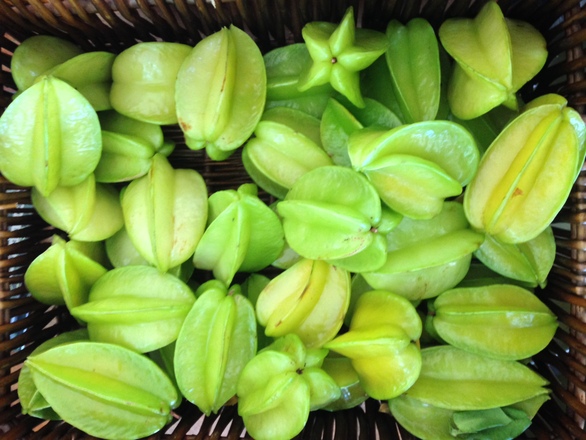
Star fruit is a star shaped tropical fruit with high nutritional value. It is also known as carambola, and native to Malayan peninsula, Southeast Asia, Pacific islands and China. The star fruit is small, bushy evergreen tree with sweet and sour flavor and  length is 2-1/2 to 5 inches. It contains very low calories and 100gram of fruit provides 31 calories.

Health Benefits of Star Fruit

Scientific name: Averrhoa carambola.

Nutritional Value:
Vitamin C 41.33%
Copper 16.44%
Vitamin B5   8.44%
Dietary Fiber 7.89%
Carbohydrate 5.59%

In Different Languages:
Hindi and Gujarati  -   Kamrakh
Telugu                    -   Ambanamkaya
Tamil                      -   Thambaratham
Kannada                -    Kaparakshi Hannu
Malayalam              -   Chaturappuli
Marathi                   -   Karambal
Bengali                    -   Kamranga

Health Benefits:
  • It cures cough, fever sore throats and ulcer. It is also good for diabetes patients and improves digestion too. The star fruit flower is good for treating children with coughs.
  • It contains fiber, helps to lose weight.
  • It has a good source of vitamin C, vitamin B5  and vitamin B9 (helps reduce the risk of heart disease and stroke).
  • It has low amount of minerals and rich amount of copper, will lowers cholesterol levels.

Hair Benefits:
  • Star fruits contains nutrients, which make your hair to circulate more freely. It has a good source of antioxidants and vitamin C will reduce the hair loss and ageing process.
  • It contains B-complex, which is important for hair growth and make your hair healthy and strong.
Skin Benefits:
  • Star fruit can be applied directly on a dry of oily skin. 
  • It purifies our blood and make our skin glow.
Share:

Tuesday, August 9, 2016

Can Fresh Fruits Help Reduce the Risk of Kidney Stones? Exploring the Potential Benefits

Scientist has found that taking fruits in every day dissolve human kidney stones. Hydroxycitrate (HCA) is an effective inhibitor of calcium oxalate crystal which is able to dissolve these crystals. People eating vegetable will not only make them healthy, also make them happy too.

Eating fresh fruits will reduce kidney stones

Calcium oxalate crystals will prevent from kidney stones. 12% of men and 7% of women are affected from kidney stones. High blood pressure, diabetes and obesity patients are affected by the kidney stones.

Patients who are at danger of developing kidney stones should take lot of water daily and also avoid foods rich in oxalate (such as rhubarb, okra, spinach and almonds and so on).

Citrate (CA) can slow crystal (kidney stone) growth.

Food supplement:

White in color: Cabbage, Radish, Turnip.
Health Benefits:
  • Improves immune system.
  • Gives protection to stomach.
  • It decreases cholesterol.
  • Provides healthy heart.

Yellow in colour: Corn, Lemon, Pumpkin, and Orange.
Health Benefits:
  • It decreases cholesterol.
  • Healthy heart and joints.
  • Gives eye protection.
  • Prevents from cancer.

Red in colour: Tomato, Chilly, Cherry, Strawberry.
Health Benefits:
  • Provides healthy heart.
  • Gives protection to our skin.
  • Prevents from cancer.

Purple in colour: Grapes, Brinjal
Health Benefits:
  • It improves your memory.
  • Improves blood vessels.


Green in color: Avacoda, Peas, cucumber.
Health Benefits:
  • Gives protection to stomach.
  • Gives eye protection.
  • Improves immune system.
Share:

Sunday, August 7, 2016

Unveiling the Nutritional Treasures: Exploring the Health Benefits of Cashew Nuts

Health Benefits of Cashew Nuts

Cashew nuts contains vitamins and minerals and full of anti-oxidants, which are required for functioning the body. Cashew is kidney or bean shape, sweet and crunchy, and children love to eat them. It contains high calories, vitamins and minerals, copper, magnesium, and zinc. It helps in digesion, healthy gums and teeth, improve bones and nerves to make healthier.


Scientific name: Anacardium occidentale.


Origin : Brazil, but later Portugese brought these nuts to India.

In Different Languages:
Tamil  -  Munthiri Paruppu
Hindi  - Cashew nuts or ‘kaju‘
Telugu - Jeedipappu
Malayalam  - Andiparippu
kannada- Geru Beeja
Gujarati - Kaju


Health Benefits of  the Cashew Nuts:

  • Prevents from Cancer - Cashew nuts contains Proanthocyanidins and high copper content which fight against cancerous cells and stop them to divide further.
  • Keeps your Heart healthy - Cashew nut contains aleic acid and low fat content which makes your heart healthier and the anti-oxidant will prevent you from hear diseases.
  • Decrease High Blood Pressure - It will decrease your blood pressure, due to the presence of magnesium.Healthy Hair - Copper content is present in cashew nut, which helps your hair get that color.Healthy Bones - Due to the presence of magnesium, it will impreove the bone healthy.
  • Prevents Gallstones - It reduce the development of gallstones.
  • Helps in Weight Loss - Due to low fat content present in cashew nut, it will reduce your body weight.
  • Helps Digestion
  • Healthy Gums and Teeth
  • Pleasant sleep - During night time, daily taking cashew nut will make you relax and gives pleasant sleep.


Share: